


Neck Pain

Neck pain care with no twisting or cracking

Gentle upper cervical care that measures where your neck has shifted, corrects it precisely and tracks how it holds.

You are not alone

From living with it to looking for the cause

Someone living with neck pain
Living with neck pain
  • Achy neck
  • Sharp, shooting pain
  • Stiffness
  • Limited range of motion
  • Muscle tension
  • Headaches from the neck
Getting back to the things you love
How we help
  • Precise measurements of your upper neck before any care begins
  • A gentle correction with no cracking, popping or twisting
  • Your progress re-checked as you heal, so you can see what is changing

Your neck holds up your head all day, lets you turn and look around, and protects the nerves that run from your brain to the rest of your body. When it hurts, everything gets harder. At Upper Cervical Chiropractic of Monmouth, we look for the misalignment behind the pain and correct it gently, with no twisting, turning or popping.

When neck pain becomes chronic

Most of the time, neck pain goes away on its own. When it lasts at least three months, it becomes chronic. It can feel like a dull ache one day and a sharp, shooting pain the next. Either way, it is hard to live with every day.

Neck pain often starts with a sports injury, a car accident or another trauma. It can also build slowly, from hours spent looking down at a phone or from sleeping in an awkward position.

Achy neckSharp, shooting painStiffnessLimited range of motionMuscle tensionHeadaches from the neckShoulder painTingling in the arm

Five common causes of neck pain

  • Muscle strains. Too much time staring at your phone or sleeping in an awkward position can strain the muscles of your neck.
  • Nerve compression. Herniated discs or bone spurs in the neck can put pressure on nerves and cause pain. Read more on our pinched nerve page.
  • Fibromyalgia. This chronic condition causes pain throughout the body, often including the neck.
  • Osteoporosis. Weakened bones in the neck can lead to small, painful fractures.
  • Rheumatoid arthritis. This chronic condition causes joint swelling, pain and bone spurs.

Fibromyalgia, osteoporosis and rheumatoid arthritis are medical conditions your physician diagnoses and manages. Our role is different. We check whether a misalignment in your neck is adding strain on top of them.

Why the upper neck matters

When a vertebra in your neck shifts out of position, it can irritate the disc and the nerves around it. That can lead to chronic tension and pain. A misaligned neck can also strain the fascia, the connective tissue around your muscles, and create areas of tension known as myofascial pain.

The QSM3 approach looks at how a body that is out of place carries tension from head to toe. We take a full spine view, because understanding the whole spine helps us correct the neck more precisely. When spinal alignment and function improve, many patients report that their pain eases too.

How a QSM3 visit works for neck pain

Your care is different from what a traditional chiropractic office offers. We do not adjust by feel. We measure first, then correct with a light, specific touch.

  1. Measure. Your first visit starts with a conversation about your neck pain, then a postural and neurological analysis. We use laser-aligned X-rays, posture analysis, thermography and surface EMG to see where your spine has shifted and how your nervous system is responding.
  2. Correct. Using those measurements, your doctor makes a precise, gentle correction by contacting areas of the neck with specificity and a gentle touch. There is no twisting, turning or popping, so most patients find it comfortable.
  3. Track. We measure again as your care continues, so you can see how your alignment is holding and make decisions with clear findings in front of you.
Gentle by design.Because no cracking, popping or twisting is involved, our care suits children, seniors and post-surgery patients.

Who we help

People come to us with neck pain from many starting points. Desk workers with stiff necks. Athletes after an injury. Drivers after a collision. People who have lived with neck pain for years and tried everything else. Since 2005 our office has recorded 310,000 visits, and many of them started with a sore neck.

If your neck pain started after a car accident, read about our whiplash and car accident care. If it travels up into your head, see our page on migraines and headaches. Neck problems can also show up as dizziness, which our vertigo page explains.

When to see your doctor first

Some neck pain needs medical attention before chiropractic care. See your physician or go to an emergency room if your neck pain follows a serious fall or crash and is getting worse, comes with numbness and weakness in your arms or hands, arrives with a sudden, severe headache, or comes with loss of bladder or bowel control. Once serious causes are ruled out, we are glad to help.

Ready to talk it through? Call or text us at 732-617-9355. Our Morganville office is open Monday to Thursday.

Dr. Larry Arbeitman
Medically reviewed byDr. Larry Arbeitman, DCFounder, Upper Cervical Chiropractic of Monmouth
Illustration: the anatomy involved in neck pain123
Inside the body

Where the upper neck comes in

The top two bones of the neck sit right where the brainstem meets the spinal cord. Here is what is involved in neck pain.

  1. 1

    Base of the skull

    Your head rests here, on the top of the neck.

  2. 2

    Atlas and axis (C1 and C2)

    The top two bones, where much of head turning happens and the brainstem passes through.

  3. 3

    Lower neck

    Five more vertebrae carry the head down to the shoulders.
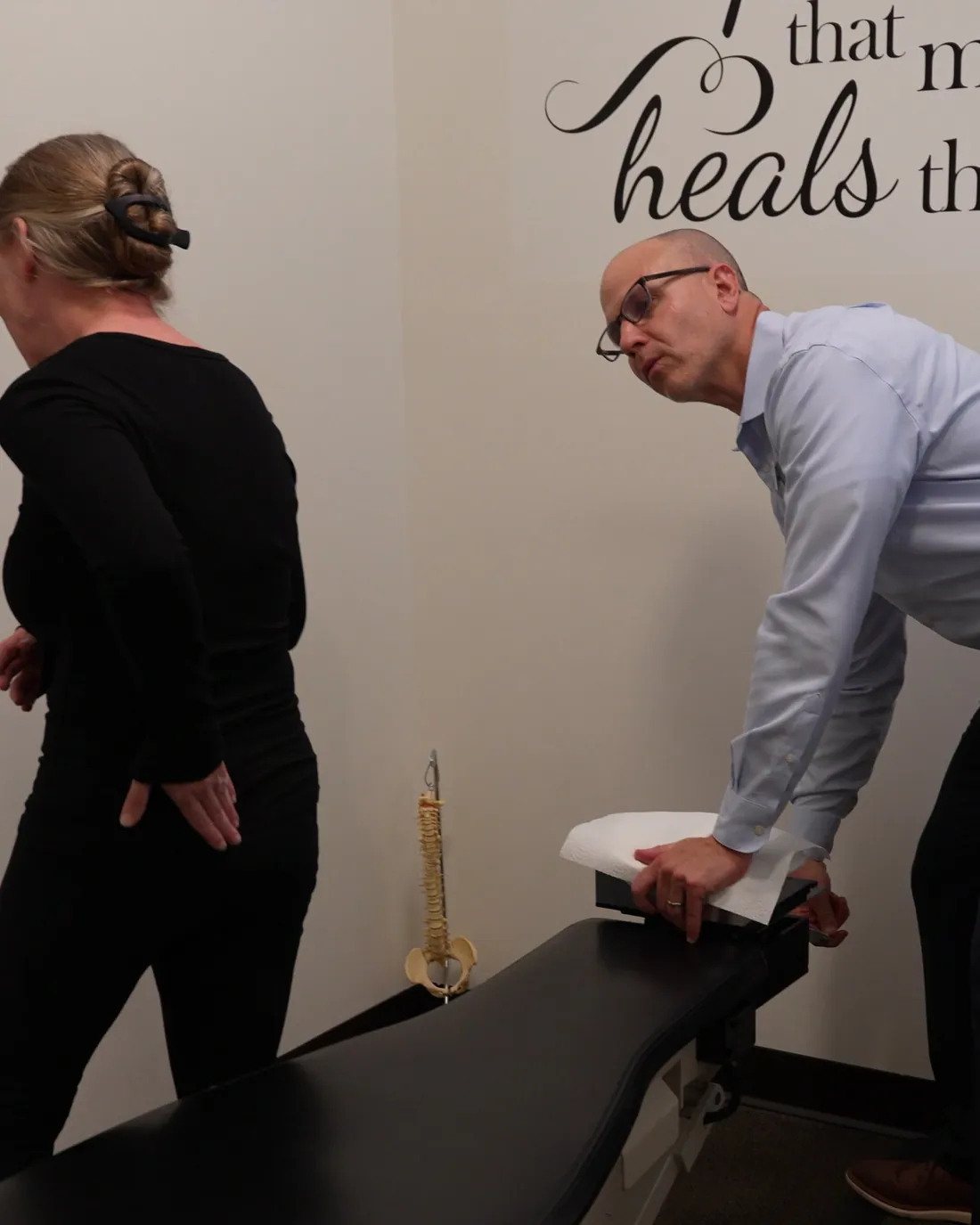
A gentle visit at Upper Cervical Chiropractic of MonmouthAt our Morganville office
What your visit looks like

Measured first, gentle always.

  • MeasureLaser-aligned X-rays, posture analysis and painless nerve scans.
  • CorrectA gentle touch on the first vertebra in the neck.
  • TrackPost-correction X-rays and re-checks as you heal.
Patient stories

Life with an easier neck.

GaryNeck pain
AmyPinched nerve in the neck
Patient storyNeck pain and mobility
PattyHer chiropractic story
MikeSevere back pain
LaurieMigraines
CarleenMeniere's, vertigo and neck pain
GregSciatic pain
Google Reviews
4.9
290 Google reviews

Real reviews from patients at our Morganville office, in their own words.

Read our Google reviewsSee 20 patient stories on neck pain
★★★★★
I been having very bad pain in my neck for 10 months and a friend told me to try it I had tried regular chiropractic and acupuncture nothing helped First when you go you think this is a joke but after a few treatments you start to feel so much better great staff and very good doctors
JJimmyNeck pain
★★★★★
Dr. Arbeitman helped me to get back to living my life again, I don’t know where! would be without his help. I highly recommend Dr. Arbeitman’s practice to anyone suffering from neck, shoulder or back pain, or anything spine related
AAnneNeck, shoulder and back pain
★★★★★
always a positive experience. helped me alot with my back and neck problems
DDeborahBack and neck problems

Shared with permission. Individual results vary.

Good to know

Questions, answered.

Still wondering? Call or text us at 732-617-9355.

Can a chiropractor help with neck pain?
Often, yes. Many neck pain patients have a misalignment in the neck that irritates discs, nerves and the surrounding muscles. We measure that misalignment and correct it gently. Many patients report less pain as alignment and function improve, and we track your progress so you can see what is changing.
Is it safe to have my neck adjusted?
Our QSM3 corrections use a gentle, specific touch with no twisting, turning or popping. That makes the care comfortable for most people, including children, seniors and post-surgery patients. Your doctor explains each step before anything is done.
How is upper cervical care different from traditional chiropractic for neck pain?
Traditional chiropractic often relies on cracking, popping or twisting the spine. We focus on the top of the neck, use laser-aligned X-rays and posture analysis to measure your specific misalignment, and correct it with a light touch based on those numbers.
When is neck pain considered chronic?
Most neck pain eases on its own. When it lasts at least three months, it is considered chronic. Chronic neck pain can feel achy or sharp and shooting, and it often affects sleep, work and mood.
What happens at my first visit for neck pain?
We talk about your history and your symptoms, then complete a postural and neurological analysis. Laser-aligned X-rays, thermography and surface EMG show us where your spine has shifted. You then get a clear report of findings and a plan built around your neck.
Should I crack my own neck to relieve pain?
Cracking your own neck may feel like a quick release, but it does not correct where your spine sits. Our care takes the opposite approach: measure precisely, then correct gently with no popping at all. Our blog post on cracking your neck explains more.

Ready for a calmer neck?

Book your first visit online or call or text us at 732-617-9355.